
PASSHE University Police Academies Help Tackle PA's Officer Shortage

On a crisp fall morning in Tioga County, Patrolman Logan Smedley begins his shift. Just a few years ago, he worked in construction. Today, he responds to calls and helps neighbors during emergencies. “I wanted to be part of something bigger than myself,” said Smedley. “To be there for people on their worst day and help them through it.”
His path to the Wellsboro Police Department began at Commonwealth University–Mansfield’s Municipal Police Academy, one of two police academies operated by universities in Pennsylvania’s State System of Higher Education. The other is at Indiana University of Pennsylvania (IUP).
Smedley graduated from the academy in 2024 and immediately started his job, an increasingly common outcome for cadets.
“We have a near-perfect placement rate,” said Christopher Wheeler, director of Mansfield’s Public Safety Training Institute.“ Police departments call us every week asking if we have graduates ready to hire.”
Police Chiefs Face an Officer Shortage
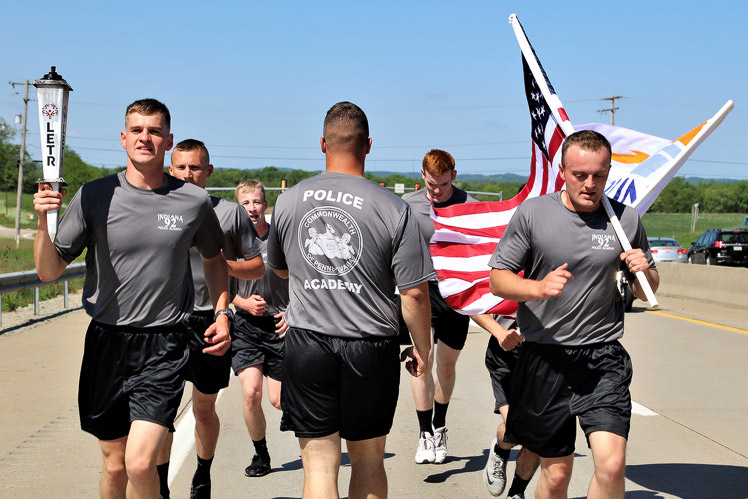
Pennsylvania has the second most law enforcement agencies in the nation, and as of 2023, had a shortage of nearly 1,200 police officers. For smaller and rural agencies, a nearby police academy can be the difference between filling positions or leaving them vacant.
Chief Chad Boyce of the Wellsboro Police Department emphasized the academy’s importance to rural and small communities: “As the chief of police of a department that is solely made up of all graduates from the Mansfield Police Academy, it is extremely important and vital to have such a great program close to our department.”
“It has become more and more difficult to find qualified applicants to fill the needs of our department,” said Chief Lanny Conley of the Plum Police Department in Allegheny County.

The Mansfield and IUP police academies play a key role in addressing this shortage. Both are certified by the Municipal Police Officers’ Education and Training Commission, allowing graduates to take the state exam and begin careers as municipal police officers.
“These academies are critical to easing the police officer shortage and making sure an officer is there when people are in need,” said Marcia Cole, director of the IUP Police Academy and Criminal Justice Training Center. “Police departments cannot hire without trained candidates. Our mission is to make sure graduates leave here with the skills and judgment to serve with integrity.”
The IUP and Mansfield academies also enroll students completing their bachelor’s degrees, allowing them to earn academic credit and Act 120 certification and enter law enforcement immediately.
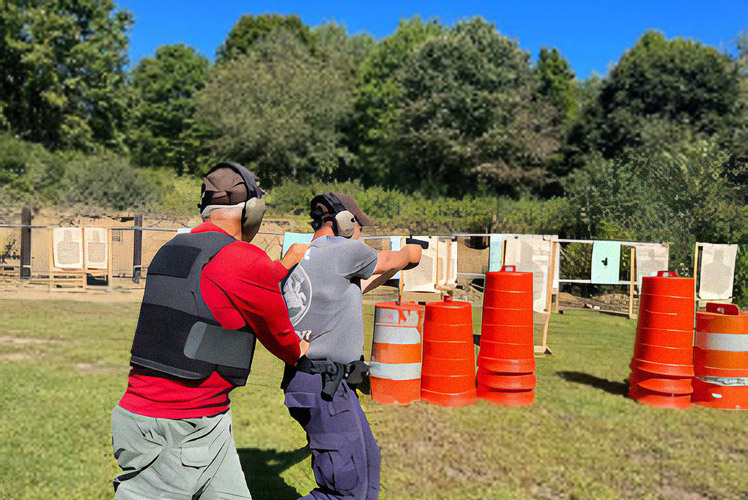
These Academies Stand Out
This year marks the 50th anniversary of IUP's police academy, during which more than 5,000 cadets have been trained, many of whom are working at local departments.
Mansfield’s police academy, established in 1977, is a vital resource for officers in rural communities, providing a steady pipeline of officers across the northern tier.
At Mansfield, cadets train at the Little League World Series in Williamsport to practice working large events and coordinating with local, state and federal law enforcement. The university also partners with the Pennsylvania State Police to allow cadets to receive 20 college credits toward a bachelor’s degree in criminal justice. In a further collaboration with the Pennsylvania Fish and Boat Commission, the academy provides police training for waterways conservation officers.
“I can always rely on the IUP and Mansfield police academies for highly motivated, well-educated and trained cadets eager to begin their law enforcement careers,” said Chief Lanny Conley of the Plum Police Department in Allegheny County.
I can always rely on the IUP and Mansfield police academies for highly motivated,
well-educated and trained cadets eager to begin their law enforcement careers,” said
Chief Lanny Conley of the Plum Police Department in Allegheny County.”
— Chief Lanny Conley, Plum Police Department, Allegheny County
At IUP, the academy partners with CNX Resources in Washington County to serve as the Pittsburgh region’s satellite site for the center’s municipal police academy. IUP’s center is the first and only municipal police training center in Pennsylvania to achieve accreditation from the Commission on Accreditation for Law Enforcement Agencies, reflecting both self-assessment and review by independent experts
“The IUP academy represents the highest standard in law enforcement training,” said Chief John Marhefka of the Lower Burrell Police Department in Westmoreland County, who graduated from the academy in 1991. “From scenario-based learning to the integration of mental health preparedness, every aspect of this facility reflects a commitment to doing the job the right way.”
Cadets with a Calling
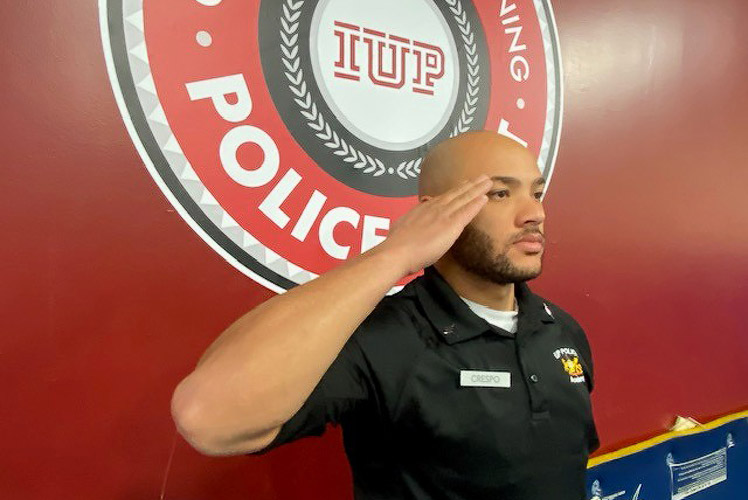
Austin Crespo, a recent graduate of the IUP Police Academy, began his career with the State College Police Department.
“After the Marines, I missed a sense of purpose,” said Crespo. “Being a police officer lets me give back to my community.”
The Johnstown native attended IUP’s academy with sponsorship from the State College Police Department. Many police agencies sponsor cadets at academies and hire them upon graduation.
As Crespo starts his career, he knows learning and training never stop in law enforcement.
“Our purpose is to serve our local communities, and they deserve all we have to give,” he said.
Cutting Edge Virtual Reality Training
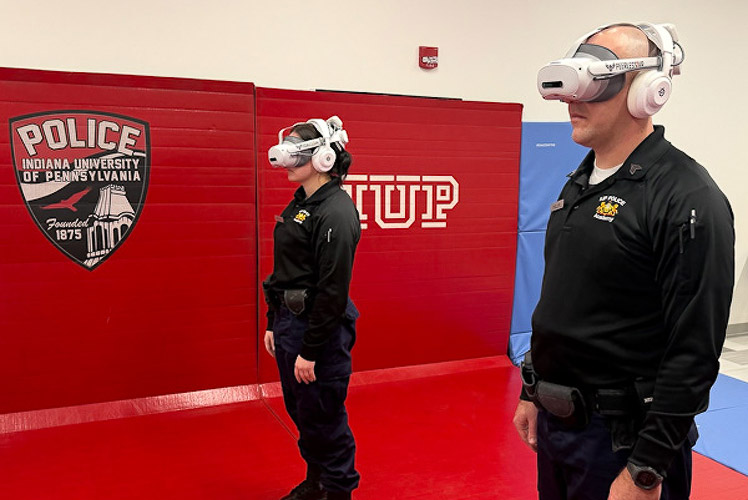
To prepare cadets for the challenges of modern policing, the IUP and Mansfield academies use virtual reality training to recreate high‑pressure situations.
Wearing headsets, cadets practice realistic scenarios, including domestic disputes, traffic stops and mental health interventions.
“VR training is an incredible way for the cadets to learn,” said Wheeler. “We can put them in many complex situations that they may face on the job. The cadets practice how they would handle it so they can take the VR experience into the real world and quickly make the best decisions.”
Crisis Intervention Training
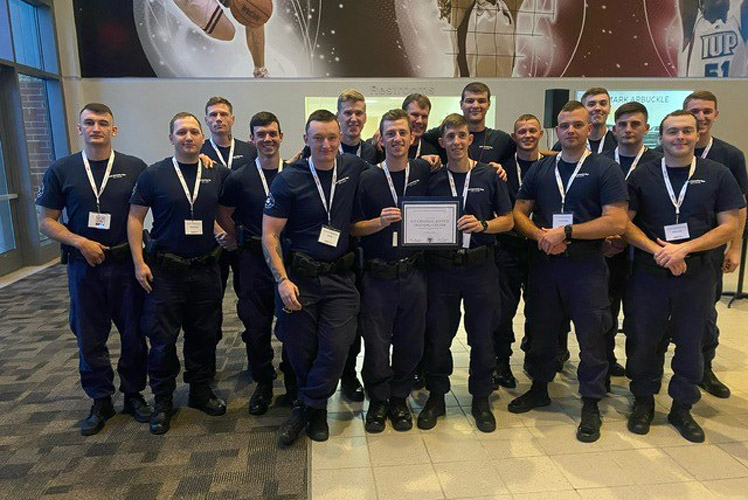
Today’s police officers need more than tactical skills. The police academies at IUP and Mansfield provide crisis intervention training that teaches cadets how to respond to people experiencing mental health crises with empathy and de-escalation. Cadets learn about mental health conditions, substance use disorders and officer wellness.
“Most people don’t realize how much time we spend learning to work with individuals in crisis,” said Crespo. “That training is invaluable. It gives us tools to keep situations from escalating and to connect people with help.”
IUP and the Armstrong-Indiana Behavioral and Developmental Health Program developed a 40-hour course to improve collaboration among police, first responders and community providers when responding to mental health crises.
“Mental health challenges affect every community,” said Cole. “This training better prepares our cadets and other first responders to recognize those issues and respond in ways that help people while improving outcomes for the community.”
Looking Ahead
With demand for officers rising, both academies are expanding outreach efforts and continuing partnerships with local police departments to sponsor cadets. For PASSHE, the work reflects its mission to provide access to affordable education while meeting workforce needs across the commonwealth.
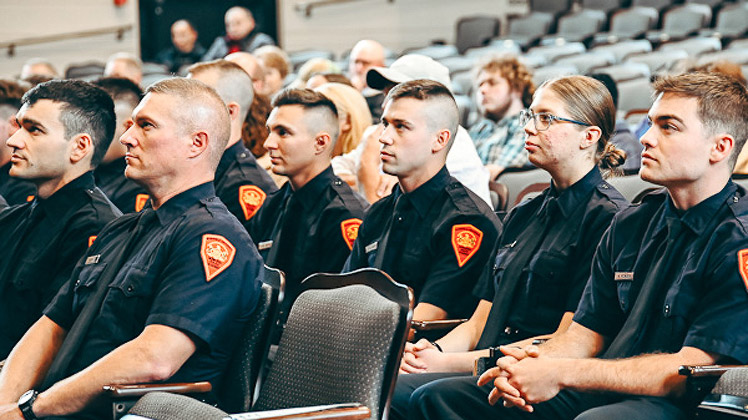
For Smedley and Crespo, the work is a commitment to protect and strengthen the communities they call home.
“Law enforcement is a very rewarding career,” said Smedley.“It’s important, and I’m proud of what I do.”